
For those of you who know a thing or two about boating and/or sailing, you can sit this one out. I’m talking with the curious of you, who have been stuck as land dwellers all your life.
I speak of moving the boat south and that all sounds terrific, but let me take you on a more practical tour of what moving the boat feels like.
First when a boater leaves the Chesapeake Bay they have two choices. One is to head out into the Western Atlantic around Cape Hatteras. Actually, not a bad sailing experience but there are a couple challenges. One, you have to get pretty far off shore to get into deep enough water to avoid hazards, but then you run the risk of getting caught in the Gulf Stream, that flow of water barreling north along the east coast of the United States heading to Europe. It’s a highway of sorts mariners use and dread. Oh, and it’s going the wrong way for moving south. Second, there’s no place to duck in for a large vessel if storms approach. We’re not looking for the thrill of the perfect storm and to be honest, hurricane season is not over.
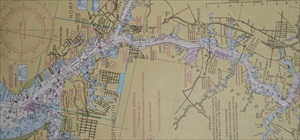
Let me introduce you to the ICW, otherwise known as the Intracoastal Waterway. You can traverse most of the east coast of the United States without ever touching the Atlantic Ocean. The Corp. of Engineers and Coast Guard maintain a commercial waterway reaching many ports and inland small towns. It’s not always fun to come this way on our journey, the depths can change and charts can be off because wind, waves and hurricanes change the bottom frequently. The advantages, there are many nooks and crannies to tuck a vessel into and wait out bad weather. Plus, some really quaint town along the way that welcome cruising boats. They’re welcoming and friendly. It’s hard to walk around some of these towns without the residents stopping to ask if you need a ride. Amazing!
So, back to the lesson. We rely on word of mouth that the charts are accurate, where we need to keep away from and where the newest shoaling is happening.
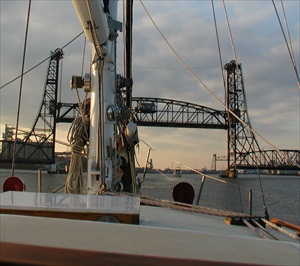
Did I mention the bridges? The dreaded bridges. First I’ll remind you we’re a sailboat. That means we have, in our case, two sticks above our deck. From the water, they reach into the sky 64′. So when we read on our chart that the vertical clearance is 4′ we get a bit nervous. The keepers of the waterway have gotten smarter and it’s taken a lot of years, but the bridges are being re-built to clear the water at 65′. Still a bit nerve-racking when the tides are extra high. Means you may not have all that 65′ from the water to clear. Good thing tides come in and out about every six hours.
In the first 20 miles of waterway there are eleven bridges and one lock, five of which have to open their spans for us and that’s assuming the four railroad bridges are still open and no rail traffic is passing through. Plus they’re timed to open on the hour, half-hour or both. There’s no putting up a sail in these 20 miles so the motor is the only mode of forward motion.
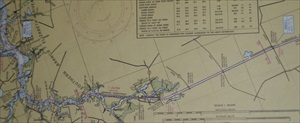
The trick is to time your arrival for just before the bridge opens so you don’t have to dance with other boats or get too close to the bridge. Did I mention there’s not a lot of room without going aground? You also must time your arrival at the bridges well ahead of the rush hours either in the morning or evening. If you arrive, just before they stop opening the bridges for two hours, you just as well drop the hook and wait it out. The problem is, you only have so much daylight and you want to have your hook down for the night well out of the channel as commercial traffic keeps moving at night. These are barges and tugs. Not something you want knocking on your haul in the middle of the night.
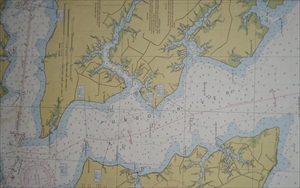
You can imagine our relief when the canals of the ICW open up to sounds and rivers. We can put up our sails and relax.
Until our next class, ask questions, I’m here to educate and for you writers out there I can help make your sailing stories a bit more authentic.
It’s those cursed bridges! Whether you go over them or under them…..they’re a pain!
=) Thanks for the sailing lesson Nancy, I’m definitely a landlubber!
Amazing!! I had no idea – I can only imagine the timing and planning that goes into the trek South. Love the lessons and can’t wait for the next one! 🙂
I am the ultimate land lover! As mush as water intrigues I’m terrified of falling overboard. Don’t laugh, but I can’t swim. I’m thirty two, and I can’t even doggy paddle!
Tamika, It’s quite alright to come aboard Fawkes. We have life jackets and everything. Even in the virtual world I can help you experience life on the water. Welcome aboard.
I guess I am not too old to learn something new! I am more than happy to visit aboard Fawkes via the internet though 🙂 I am not so sure I would not get sea sick ( as I still get an occasional bout of car sickness!) Sending up prayers for a safe journey to the south. Hugs…
I love this post. If you’re not patient or can’t learn it then you’re in trouble on a sailboat. I sometimes think the outside is better but you are right about the season. Inside is beautiful. Great post!